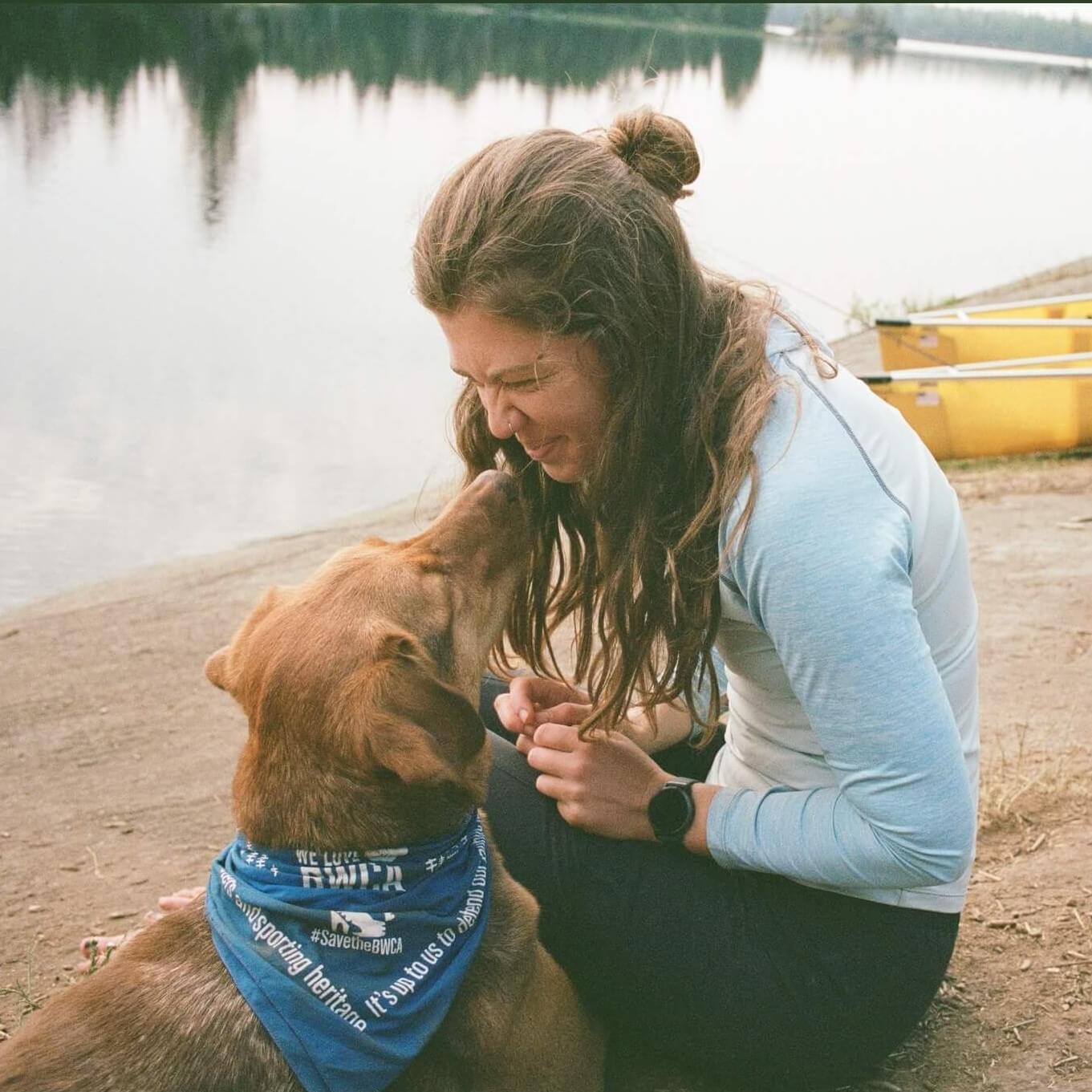
My team

My Story…
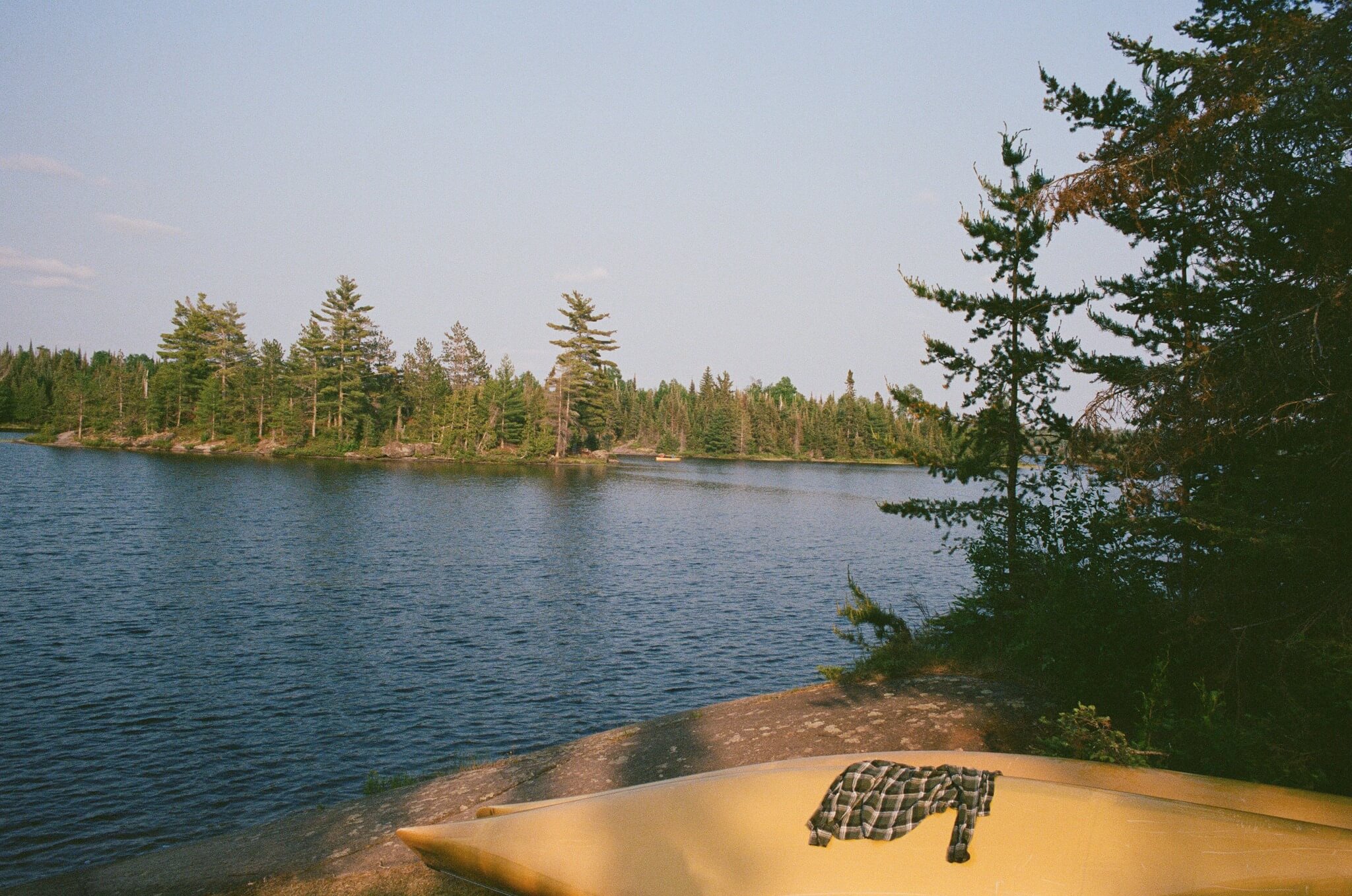 When I reflect on moments in my life where I have truly been present and at peace, they all come at times spent in the Wilderness.
In my early days of undergrad, one of my very first summer jobs was as a canoe guide in the Boundary Waters. On my first trip as a guide, most of our participants were first timers in the BWCA. One night my co-lead read out loud a passage from Reflections of the North Country called "Timelessness". To me, this excerpt best conceptualizes the feeling of connectedness one experiences in the Wilderness.
It is difficult to put into words the impact our natural spaces, such as The Boundary Waters, have on us as individuals and communities. They are some of the last truly Wild places left and by far worth protecting.
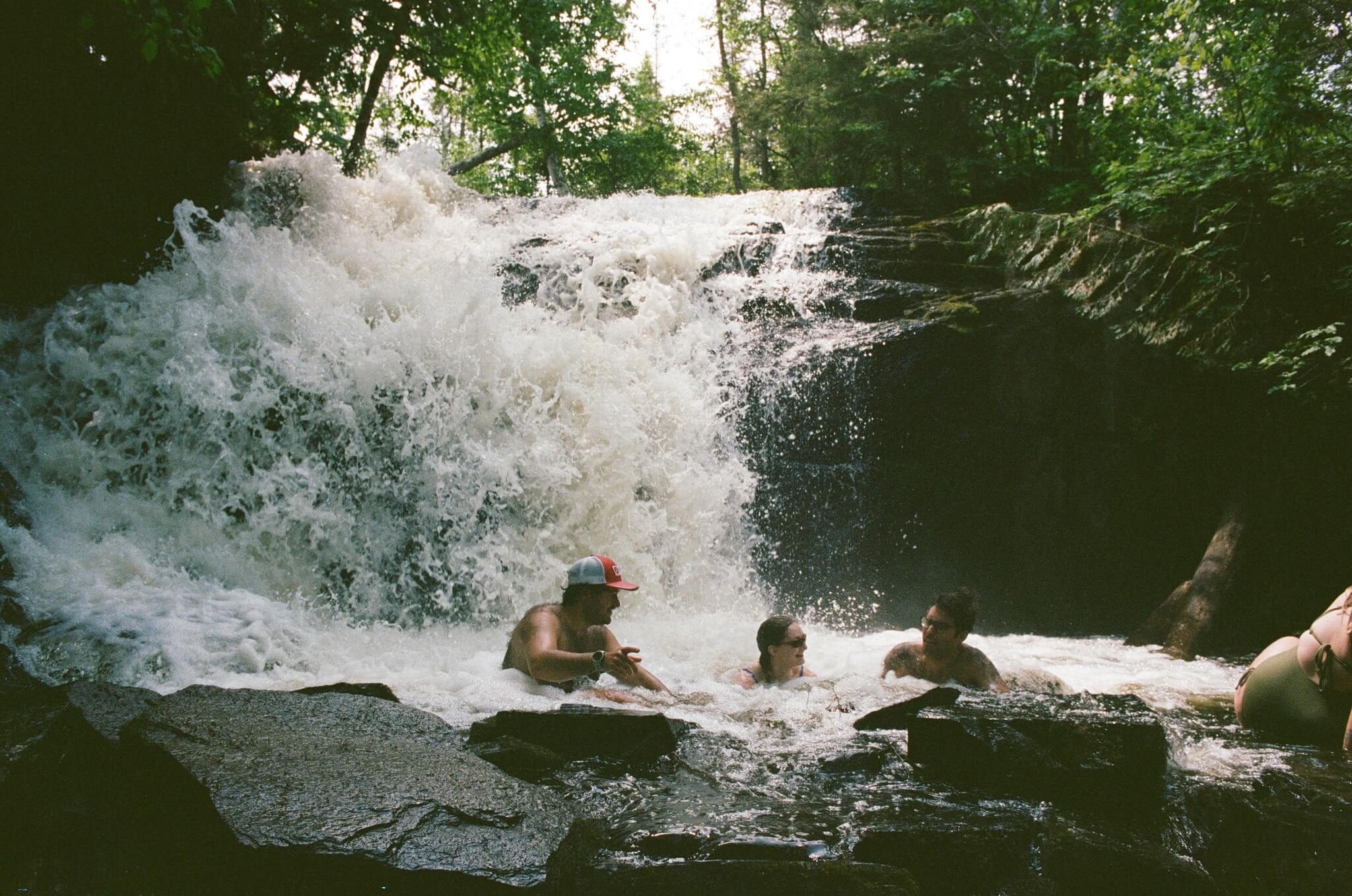 I truly believe time spent with nature betters all of us. Over the last decade or so, I have centered my personal and professional life around connecting people to the natural world. I am forever grateful to have work within this capacity.
With that, I have committed to running the 2026 Twin Cities Ultra Looney Challenge to help Save the Boundary Waters and preserve the sense of Timelessness for generations to come.
Please consider reading through the "Timelessness" excerpt, donating to my fundraiser, sharing your story of the Wilderness, and/or whatever is within your capacity to speak loudly for this quiet place.
P.S. I'm also excited to announce that Kenny and I have plans to elope in the BWCA June 2027 :)
-------------
An excerpt of Reflections from the North Country by Sigurd F. Olson, 1976:
-------------
Timelessness
When one finally arrives at the point where schedules are forgotten, and becomes immersed in ancient rhythms, one begins to live.
Our lives seem governed by speed, tension, and hurry. We move so fast and are caught so completely in a web of confusion there is seldom time to think. Our cities are veritable beehives dominated by the sounds of traffic and industry. Even at the top of the highest building, one is conscious of the hive's human busyness.
The change of seasons is often unobserved, the coming of winter, spring, summer, and autumn. Winter merely means an aggravation of traffic and transportation, spring the sloshiness of rain, summer dust and heat, fall the withering of transplanted flower and the threat of cold. For one who has lived in the wilderness, it is impossible to adjust to this, and each time I come away from the city, I feel drained of silence and naturalness.
During a trip into the wilds, it often takes men a week or more to forget the frenetic lives they have led, but inevitably the feeling of timelessness does come, often without warning. On a trip long ago, I remember the first impact of a rising full moon. We were in the open on a great stretch of water, with islands in the far distance. The sky gradually brightened and an orange slice of the moon appeared; we watched as the great sight unfolded before us. At that moment, the city men in the party caught a hint of its meaning. They were entranced as the moon became clear: pulsating as though alive, it rose slowly above the serrated spruces of the far shore. Then, as it almost reluctantly paled, we took our paddles again. We searched and searched and found a long point from which we could see both sunset and moonrise at the same time. The calling of the loons meant more after that, and as the dusk settled all were aware of something new in their lives.
I know now as men accept the time clock of the wilderness, their lives become entirely different. It is one of the great compensations of primitive experience, and when one finally reaches the point where days are governed by daylight and dark, rather than by schedules, where one eats if hungry and sleeps when tired, and becomes completely immersed in the ancient rhythms, then one begins to live.
For uncounted millennia man lived this way; only under the stress of danger and the activity of the chase was it violated, and then just for short periods. Life went along as smoothly and gradually as the rising of the moon. It is this long inheritance that governs us in spite of our supposed sophistication. No wonder we have nervous breakdowns and depend on artificial calming devices to sleep and quite down.
It is not surprising city dwellers leave their homes each weekend and head for beaches, mountains, or plains where they can recapture the feeling of timelessness. It is this need, as much as scenery or just getting out of town, that is the reason for their escape. In the process, however, they may still be so imbued with the sense of hurry and the thrill of travel that they actually lose what they came out to find. Many tour the national parks with the major objective of getting as many park stickers as possible in the short time available, and what should have been a leisurely experience becomes a race to include all the areas within reach. When such travelers return, they are often wearier than when they started.
I shall never forget a young couple who roared into a lookout spot of the Grand Canyon just at dusk when it was at its most spectacular, with the last slanting rays of the sun touching the tops of pinnacles with gold just before they darkened into the deep blues and lavenders of night. Several of us had been waiting for an hour, feasting on a panorama unequaled anywhere in the world, and over it was a silence and timelessness that gave added meaning to the scene.
Without warning, a car door slammed and the couple hurried to where we were. In a moment the girl said, "We'll, we've seen this one. Let's try and make it to the next before we call it a day," and off they sped into the night. I know they were disappointed, for tension and activity were really their goal. They were doing what so many do: "killing time," as though time were inexhaustible and could be wasted at will.
In the wilderness there is never this sense of having to move, never the feeling of boredom if nothing dramatic happens. Time moves slowly, as it should, for it is part of beauty that cannot be hurried if it is to be understood. Without this easy flowing, life can become empty and hectic.
Not long ago, as I was sitting beside my cabin, a mink came along the shore followed by three half-grown young. They were in and out of the waters lipping over rocks and between roots, and their movements were grace personified. They did not see me, nor were they conscious of my scent, for I was hidden by a clump of hazel and the wind was from the shoreline. They soon disappeared in their eternal search for food, or perhaps just for the joy of movement.
That afternoon I paddled down a river, flowing through mats of sedges, with towering hills toward the north. A golden eagle soared high above the ridges, gliding without effort on the wind currents over the valley. As I watched the huge bird, I could not help but feel I was part of its lazy movement, of the sky and the wind, looking down over its domain as eagles had done for centuries, when only Indians were there to mark its flight, or voyageurs in birchbark canoes on the way from Lake Vermilion to Shagawa Lake and the border.
With natives one is more conscious of this sense of timelessness. They look at us with puzzlement, wondering why we hurry so desperately. In Hawaii a year ago I saw a native Polynesian standing on a sandy shore where the surf came in. He was alone, bronzed and calm, just listening to the endless roar as the glistening combers truck the reefs outside. He had his surfboard and I knew he had been part of the scene for hours, possibly all day long. If he had been a white, he might have thought of taking one more ride, but he merely stayed there quietly, reluctant to leave.
In the Far North of this continent, I have known Indians and Eskimos and have sensed ancient rhythms with them, the feeling of endless time, and I sometimes think the reason we do not understand them is because they listen to a different drummer and see no purpose in the constant pushing and rush. Back of this sense of unlimited time is an entirely different philosophy of life from ours.
We cannot all live in the wilderness, or even close to it, but we can, no matter where we spend our lives, remember the background which shaped this sense of eternal rhythm, remember that days, no matter how frenzied their pace, can be calm and unhurried. Knowing we can be calm and unhurried we can refuse to be caught in the so-called rat race and the tension which kills Godlike leisure. Through conscious of the roar around us, we can find peace if we remember we all came from a common mold and primeval background. It is when we forget and divorce ourselves entirely from what man once knew that our lives may spin off without meaning.
Donate to help Abigail raise money for 2026 Medtronic Twin Cities Marathon Weekend’s fundraising campaign.
Recent donors
| Donation date | Donor name | Donation amount |
|---|---|---|
| Oct 01 | Anonymous | $106.00 |
| Sep 30 | Sym & Cam Clough-Raughtigan | $106.00 |
| Sep 30 | Alyssa Brault | $26.50 |
| Sep 29 | HRB | $26.50 |
| Jul 31 | Kc | $26.50 |
| Jul 31 | Ecklins | $37.10 |
| Jul 30 | Lucas & Grace Elliott | $106.00 |
| Jul 09 | Isaac Lindstrom | $53.00 |
| May 25 | Waylon, Landen, & Andrea | $106.00 |
| May 23 | Kari T | $35.00 |


